


Introduction
Stepping into a Muay Thai gym is more than just a workout — it’s a journey of self-discipline, respect, and transformation. Every day in training builds not only physical strength but also mental focus and emotional resilience. From warm-ups to sparring, each part of a Muay Thai student’s day is designed to shape both the fighter and the person within.
1. Morning Conditioning and Warm-Up
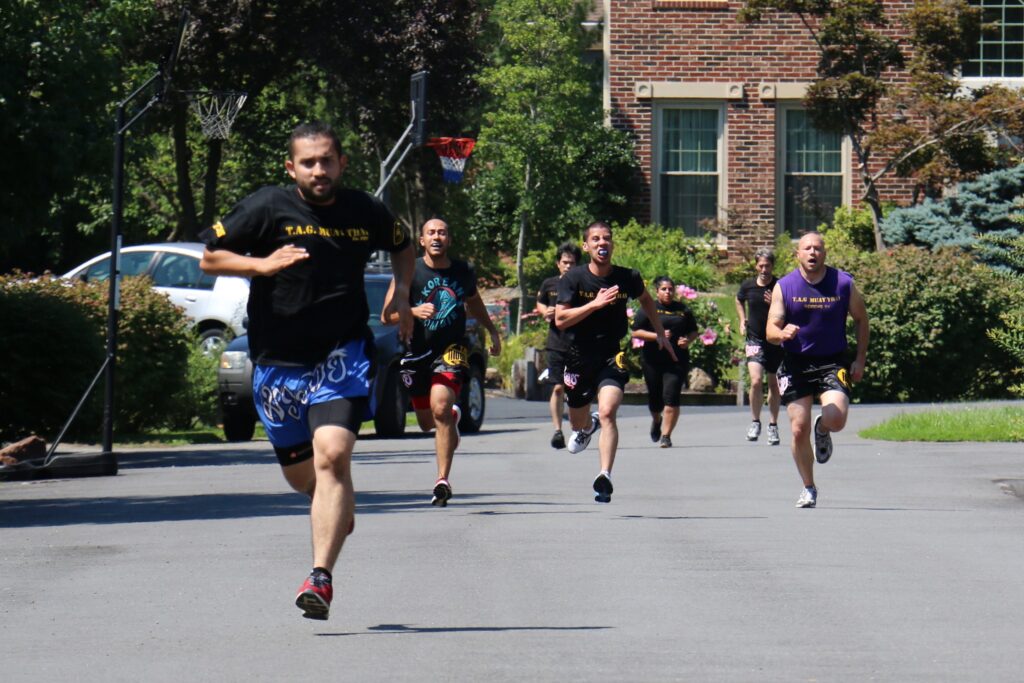
The day often begins with roadwork — running or skipping rope to build endurance and wake up the body. This early session develops stamina, mental clarity, and determination to push through fatigue. A proper warm-up prepares the body for intense training and helps prevent injuries.
Key Points:
- Builds cardiovascular strength and endurance.
- Prepares muscles and joints for high-impact training.
- Improves mental focus early in the day.
- Reinforces consistency and discipline.
2. Technical Drills and Pad Work
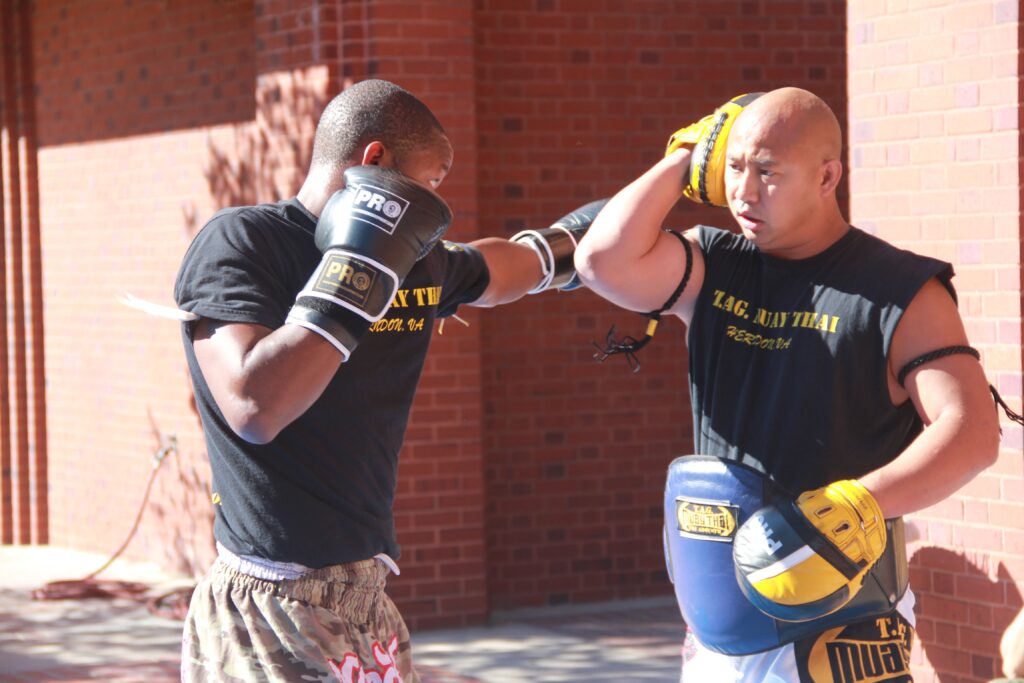
After conditioning, students focus on improving technique with drills and pad work. Trainers guide fighters through punches, kicks, elbows, and knees — emphasizing precision and balance. Pad work is where students learn timing, rhythm, and how to connect power with control.
Key Points:
- Sharpens technique and striking accuracy.
- Develops coordination between offense and defense.
- Builds speed, rhythm, and fluid movement.
- Encourages one-on-one learning with experienced trainers.
3. Sparring and Controlled Practice
Sparring sessions test everything a student learns — but in a safe, controlled environment. It’s not about knocking out your partner, but about refining timing, defense, and adaptability. Every round helps students stay calm under pressure and think strategically.
Key Points:
- Improves reflexes and reaction time.
- Teaches situational awareness in the ring.
- Builds confidence through realistic practice.
- Strengthens respect and sportsmanship between partners.

4. Strength Training and Core Work
Strength and conditioning come next, focusing on bodyweight exercises, heavy bags, and core routines. These drills improve balance, power, and endurance — essential traits for a Muay Thai fighter. Building physical strength also reduces injury risk and enhances overall performance.
Key Points:
- Builds powerful strikes and stable movement.
- Increases muscle endurance and agility.
- Supports injury prevention through balanced training.
- Develops long-term athletic resilience.
5. Cool Down, Reflection, and Respect
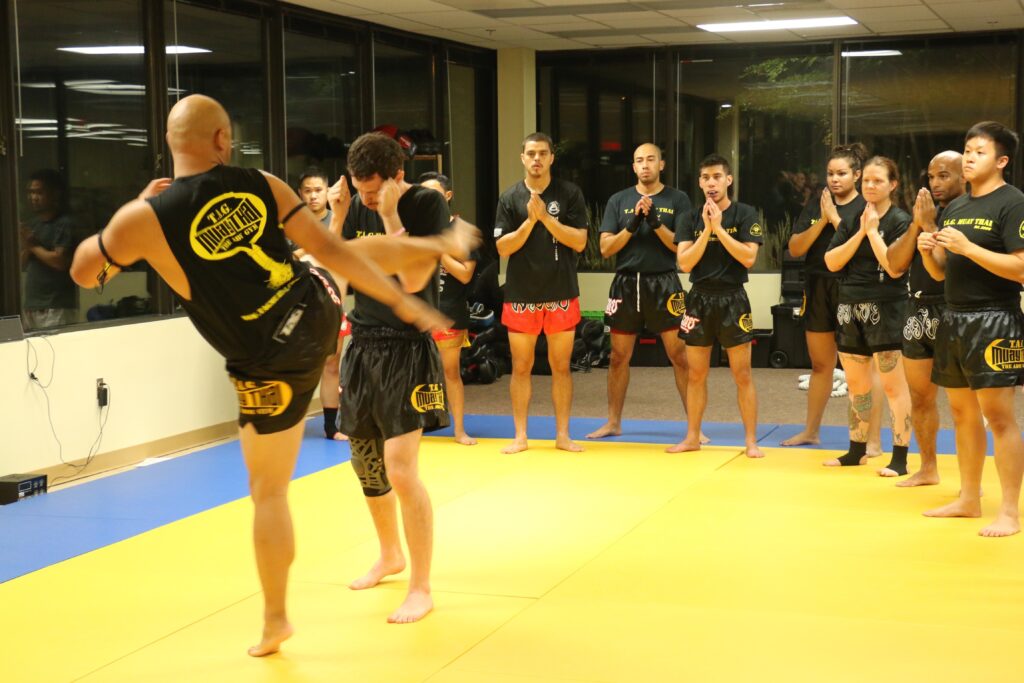
Training ends with stretching, meditation, or breathing exercises — helping the body recover and the mind stay centered. In Muay Thai, respect is shown through the wai (a bow) to trainers and teammates, reminding every fighter that humility and gratitude are key to growth.
Key Points:
- Promotes recovery and flexibility.
- Builds mindfulness and emotional balance.
- Reinforces respect for the art and community.
- Encourages gratitude after every session.

Conclusion
A day in the life of a Muay Thai student is a blend of hard work, focus, and respect. Every punch, kick, and breath teaches lessons that go far beyond the gym — lessons of perseverance, humility, and strength. The Muay Thai lifestyle isn’t just about fighting; it’s about becoming the best version of yourself, one training session at a time.